Sunday, 12 January 2014

The Devil's Bargain

Social media is a wonderful thing - one minute you're watching a video of a cat, the next a friend is offering you the chance to review this film he's worked on.

Now, normally, a free viewing and we're there quicker than Richard Parker on a mouse, but this is someone I 'know' (it's Facebook, I've never met him, but he knows where I post).

Which presents something of a problem - what if it's terrible?


You see, take something like Movie43. We all know that was terrible, but one can pull that apart with gay abandon because the chances of ever bumping into Richard Gere (OK, bad choice, he's almost admitted it was a mistake) or such are minimal.

You're not likely to meet the person you've berated is my point.

But with a low-budget indie flick? Brought to the world by internet buddies? OK, deep breath...

You see, joking aside, I was genuinely afraid of this film being bad. And not just because I'm a coward.

Someone has got their stuff together, pulled together the money, cast and crew and gone and made a film. For that alone we should applaud.

And I don't want to be the one to say 'actually guys...', because no one wants to be the one who pricks someone else's balloon. Well, not unless you're Iain Duncan Smith.

Fortunately, that's not going to be a problem.

Set in 1974, on the day the world is about to end, The Devil's Bargain follows Adi (Jonnie Hurn) and Ange (Chloe Farnworth) as they return to the scene of past happiness to await armageddon.

All goes swimmingly until the sinister Luca (Dan Burman) turns up, at which point Adi and Ange's world starts to fall apart. And well before the world actually ends. If you follow.

All of this is played out with a back-drop in the form of Fintan Ryder (AJ Williams), an omnipresent DJ broadcasting for one last time - his ponderings, musings and readings providing timely insertions to the madness.

(This also brought to mind the Shooter Jennings album Black Ribbons, featuring Stephen King as a DJ broadcasting til the station is taken from under him. No, I know you haven't heard of it, but that's not my fault. You should have.)

Now, going by the poster, I was kind of expecting a horror film. And I sort of got one, but not in the modern, 'limbs flying every, people screaming' sense.

Far from it.

The Devil's Bargain has its roots firmly in the Hammer house, sparing the blood but layering the psychological tension and parallels between biblical and real life revelations.

There's also the same attitude to nudity that Hammer used to enjoy, only this doesn't feel seedy and exploitative, and is shared equally around the cast.

There are also parallels to draw with last year's Midnight Son, with the same steady pacing being used to slowly build the tension to great effect.

And that's where The Devil's Bargain is at its best, slowly revealing the dirt beneath the surface of this failing artist and his hippy bride.

As the story unfolds, you are drawn further and further in, the warm colourings and use of sunlight cushioning you from what is to come.

OK, sure, you know who Luca is when he turns up, but that just adds a certain level of glee as he persuades Ange to share his apple.

It looks visually arresting and is wonderfully styled, but all of that counts for bog all if you've got three tailor's dummies on screen.

Fortunately, in both Dan and Jonnie, writer/director Drew Cullingham has two people who perfectly encapsulate their roles.

Jonnie's trips between grief, love and anger are fluid and believable, while Dan delivers just the right amount of gleeful chaos.

Not sure he'd have been wearing that T-shirt in 1974, but given just how much Drew has got right here we'll have to trust him.

My only real issue (occasional clunky dialogue aside), sadly, is with Chloe Farnworth. While her male co-stars shine, at times she comes across as reciting lines rather than delivering a performance.

That said, however, her final scenes are excellent. (No I'm not saying what they are - you'll have to watch it).

The Devil's Bargain keeps you enthralled as you await the end of the world, with twists and revelations to keep you guessing as the biblical references whizz around your head like rotten apples.

Coming at half a Hobbit as well, it's not a film that outstays its welcome.

It'll make you think, it'll keep you in your seat, but if none of that grabs you (and it should) you can enjoy the wonderful use of sunlight.

With so much crap being flung out by Hollywood these days (don't rule out a Grown Ups 3), it's refreshing and uplifting to find an indie flick that is bold, eye-catching and so bloody enjoyable.

* Normally we'd have the trailer for this as well, but we're a family friendly place and the official trailer has flashes of naughty bits - so enjoy a video of Richard Parker drinking out of  tap instead, and then go find the trailer on YouTube...

(The Devil's Bargain will be available to watch online from Friday)

12 Years A Slave (15)

There has been a buzz around this film for months, with the world and his mistress telling anyone who will listen just how stunning a film it is.

But we've heard it all before right? These things just set the film up to fail, no?

No. Not this time.


You see, this time, they're right.

Telling the tale of one Solomon Northup, an upstanding member of his New York community and a fine musician, Slave takes us through the harrowing details of when Solomon was kidnapped.

Based on the man's own book, we are shown - in explicit detail - how human beings were traded as animals, treated worse than animals, and how one man managed to find his way back to his family (this is hardly a spoiler, given he couldn't have written the book while working the cotton fields).

But don't be lulled into thinking this is some schmaltzy Hallmark gubbins - it's anything but.

The violence the slaves suffered, the arrogance and hatred of their "owners" is laid bare in brutal detail, with people whipped with such severity you feel guilty for watching.

So why watch it, I hear you mutter. Doesn't sound like it's going to be fun...

Well, strangely, it is.

OK, not fun, but it's gripping, enthralling, captivating, beautifully shot and there's not a bad performance in the whole damn thing.

Most of this is down to Chiwetel Ejiofor, whose performance in the title role is nothing short of spellbinding.

He not only captures the struggle and bewilderment of Solomon perfectly, but also brings to the fore such passion and humanity you feel you've picked alongside him under the Southern American sun.

Having, reportedly, not been keen on taking the part, you watch him knowing no one else could have done this. No one else could have made you feel for Solomon the way he has - and he deserves every award that is set to litter his bookshelves in the coming months.

But he's not shining amongst a bunch of no-marks, oh no.

His performance is further highlighted by just how good his co-stars have to be to keep up.

Michael Fassbender is brilliantly brutal as Edwin Epps, the farm owner who becomes the final owner of Solomon, while Brad Pitt is wonderfully understated as the only man who actually tries to help Mr Northup.

Then there's Benedict Cumberbatch, Paul Giamati, Sarah Paulson and Lupia Nyong'o - who, going by this film debut performance, is set for a seriously HUGE career.

But it's not all about the performances.

I mean, it is, sure, but it takes a delicate hand to tackle this story and this many stars and bring to the screen such a balanced, heartbreaking, uplifting yet harrowing tale.

Which Steve McQueen has done.

In only his third feature film (although let's not forget the plaudits his first two, Shame and Hunger, received), McQueen has produced a work of simple brilliance.

Not only does Slave look beautiful, but he brings the drama and cruelty to the fore in a way which is emotionally devastating.

Yes, the violence is strong - but that's what happened back then. McQueen isn't revelling in it, he's laying it bare to make the point that certain members of the human race were lacking in humanity.

And that's the point of this film - that this actually happened. A free man was kidnapped and sold into slavery and there was nothing he could do about it.

Like Long Walk To Freedom, this is a story that needs telling. But unlike the Mandela biopic you don't come out of it feeling you've been smashed over the head by the very book the film is based on.


No, this isn't an 'easy' film to watch - the beatings are bloody and frequent, and hangings happen more often than you'd like to know about.

But if you aren't at the very least slightly damp around the eyes by the end, having gone on this incredible journey, then there's no hope for you...

Sunday, 5 January 2014

Mandela: Long Walk To Freedom (12A)

Sweet mother... I haven't struggled with a review like this for some time. Still, deep breath, here we go...

You see, while I don't want to appear dismissive of a film dealing with such a worthwhile subject and man, several hours after watching I still feel as if there was something missing.

The easiest way to describe it is to draw a parallel with Invictus (the 2009 biopic staring Morgan Freeman and Matt Damon), which left me feeling more uplifted.


But let's start with the positives here.

In Idris Elba (as Nelson) and Naomie Harris (Winnie), Long Walk has two actors who dominate the show, bringing passion and belief to the screen - with Elba almost making you forget Freeman played him.

Played Mandela, that is, not Idris Elba.

And it looks stunning, with sweeping panoramic shots of Mandela's homeland contrasting brilliantly with the townships he was forced to live in during the struggle for equality.

And it's the struggle that comes across loud and proud.

Make no mistake, this is not an easy watch. You can't spend any length of time in the company of this movie without getting angry at the way the white minority treated the indigenous population in South Africa.

The violence, the vile treatment - it's all here, interspersed with historical footage of coverage of some of the worst massacres.

What also comes across well is how events shaped the two main characters in very different ways.

While certain Western leaders were keen to label Mandela a terrorist, Long Walk shows us it was the actions of the ruling white minority that led him to take more drastic, direct action.

It's the same with Winnie.

Her public persona is not a kind one, with history painting her as a woman who went off the rails while Nelson was locked away on Robben Island.

But what we learn from Long Walk is how her treatment at the hands of the ruling elite (she was in solitary confinement for 18 months in a bid to break the drive for equality) shaped her. Previously she was happy to support her husband, but after her treatment she was hell bent on revenge.

And, in all honesty, it's hard to blame her. Suffer 18 months of physical and mental abuse while your children are looked after by someone else and see how you react.

And it's this treatment that, for me, provides the stand-out moment in the film.

On her release, Winnie gives a brief speech outside her home - a speech delivered with such belief by Harris that it gave me goosebumps.

Sadly, such emotional high points are few and far between.

While the film recounts an important piece of history, carrying a message that still stands today,  it does so at too steady a pace.

A really, really steady pace. Remember how Lincoln never got out of second gear? That.

OK, it's stating the obvious to say that Mandela's life was light on laughs before he became president - but there is no respite here in the endless anger, fighting and struggle.

I'm not saying - and let's be very clear about this - that they should have rewritten history to make a comedy of the whole thing, far from it - this is, as I've said already, an important piece of history that needs documenting.

Invictus, by comparison, is uplifting - particularly the piece about the poem he read every day in his cell.

OK, Long Walk couldn't cite that - the poem's title was used in the other film after all - but what it does is show us how he somehow grew spiritually while on Robben Island.

What Long Walk tells us is that his time in incarceration didn't break him. Which is not the same thing.

And at two hours 20 minutes, you come out of this feeling like you've not only read the whole of Long Walk To Freedom, but been repeatedly hit over the head by it.


Despite this, Long Walk is still a great film with - as I may have mentioned - two stunning portrayals at its heart.

It certainly deserves its 'epic' tag, and you can guarantee the Oscar judges are going to be all over this - and deservedly so.

But while it is a film of great performances, for me it is not a great film.

* Popcorn postcript:

Having gone back to see it again (not my idea, granted), it is a better film on second viewing.

Still too many questions about how his time on Robben Island shaped him (how did he not follow the same path as Winnie, given we're shown nothing but the oppressive control he was under?) and how did a man of war become a man of peace?

And why the hell is Bono singing at the end?

But the central performances are still stunning (even if they do dominate to the detriment of the rest of the cast), and it still looks beautiful.


PS: One trailer I've seen is painting Long Walk To Freedom as a tense, political thriller with guns and chases galore. It's not that film. Yes, there are guns, and explosions, and people running about. But it's NOT that film.

Saturday, 4 January 2014

American Hustle (15)

The problem with making a highly successful film like, say, Silver Linings Playbook, is that at some point people are going to want you to make another one.

But what to do? Repeat the formula? Try something totally different? How about sticking to the comedy drama mix but going back to the 70s?

Bingo.


Of course, it helps if you've already got a cast that have worked together before (Bradley Cooper and Jennifer Lawrence were both in Silver Linings), so all you've got to add is a few quality ingredients to the mix - in this case Jeremy Renner, Amy Adams and Christian Bale.

To name a few.

If you've missed the hype, the buzz or the trailers (and all have been everywhere), Hustle is a 70s comedy-drama dealing with an FBI bid to bring down corrupt officials using a couple of experienced con artists.

What could go wrong, eh?

Now, obviously, there are going to be comparisons with Silver Linings (some dimwit on Radio 4 was complaining recently that Hustle wasn't as 'manic' as Playbook - there's a reason for that...), but there shouldn't be.

American Hustle should be allowed to stand alone. It's not Playbook 2 for crying out loud.

For a start, this is a period piece, with the dialogue, performances and filming all paying wonderful and deep homage and respect to the crime thrillers of the 70s.

There are shots and scenes that if you caught them on Five on a Sunday afternoon, you would think were filmed almost 40 years ago - the tone and feel is totally on the button.

Which is no mean feat - director David O. Russell deserves all the praise and credit that will surely be heading his way come awards time.

Then there are the performances themselves.

There was a real danger here, given the weight of talent on screen, that this could have become a very unbalanced affair - but nothing could be further from the truth.

Not only does everyone perform out of their skin (just think, if Jennifer Lawrence is this good NOW, where does that leave everyone else in five/ten years time?), but they all understand that this is a true ensemble piece. They all need each other to shine.

And shine they do.

As the tacky, out-of-shape, balding con artist, Christian Bale is sublime. Vaguely reminiscent of Tom Cruise in Tropic Thunder, Bale is the epitome of the anti-hero. He's seedy, unfaithful, fat... And yet you root for him every step of the way.

As you do with Amy Adams, his glamorous sidekick and co-conspirator, and Lawrence (his mouthy, brassy wife who has a tendency to set fire to stuff). Both are wonderfully slick, totally believable and unsubtly sexy.

Again, you shouldn't like them, but you do. Especially Lawrence.

Now, as I write that I feel bad because Adams (fresh from her performance as Pulitzer prize-winning journalist Lois Lane in Man Of Steel) is stunning. She has a depth I've not seen in her before, a steel that makes her stand out from the crowd.

It's fair to say she matches Lawrence step for step.

In fact, you could have had just these three for two hours and you'd have had a blast.

It's full credit, then, to both Cooper (as the oh-so-keen FBI goon) and Renner (as the corrupt-ish Mayor) that they make the impact they do on screen. Both are surprisingly subtle in their depictions of men driven to succeed at all costs.

If there's one complaint with American Hustle, it's the running time.

Getting close to two-and-a-half hours, sure it's shorter than Peter Jackson's Desolation Of Tolkien, but it's noticeably longer than, say, Playbook. Or Gravity.

Again, you have to give full credit to the cast that you don't start shuffling in your seat - and you're engaged enough to be busy trying to work out who is going to be conning who as the action unfolds - but it does not need to be this long.

At two hours, this would be amazing and I wouldn't have lost the feeling in both buttocks.

It helps, of course, that the music is so good.

Seriously, if I ever get to host one of those dream dinner party thingies, Russell's coming and he has to bring his iPod (or whatever device he chooses - I have a record player, it's not a problem).

Because, with this being a pure 70s film, the music is the icing on the slightly over-sized cake. We have Elton John, America, Tom Jones and Wings' Live And Let Die (with Jennifer Lawrence making you forget Guns N Roses ever got their hands on it).

The soundtrack doesn't 'make' the film in the same way as, say, the sound does in Stoker - but without it Hustle would be a less opulent, rich experience.

Running length aside (seriously, you only needed to shave 20 minutes off...), what you get in American Hustle is a bag full of fun and intrigue.


The plot keeps you guessing, the performances keep you entranced (Cooper in curlers is a particular highlight) and the soundtrack reminds you that there was far more to 70s music than Abba.

It's too early to call this as the best film of the year (as some already have) because, you know, it's January 4 - there's a lot of year left.

But we're off to a rollicking good start.

Saturday, 14 December 2013

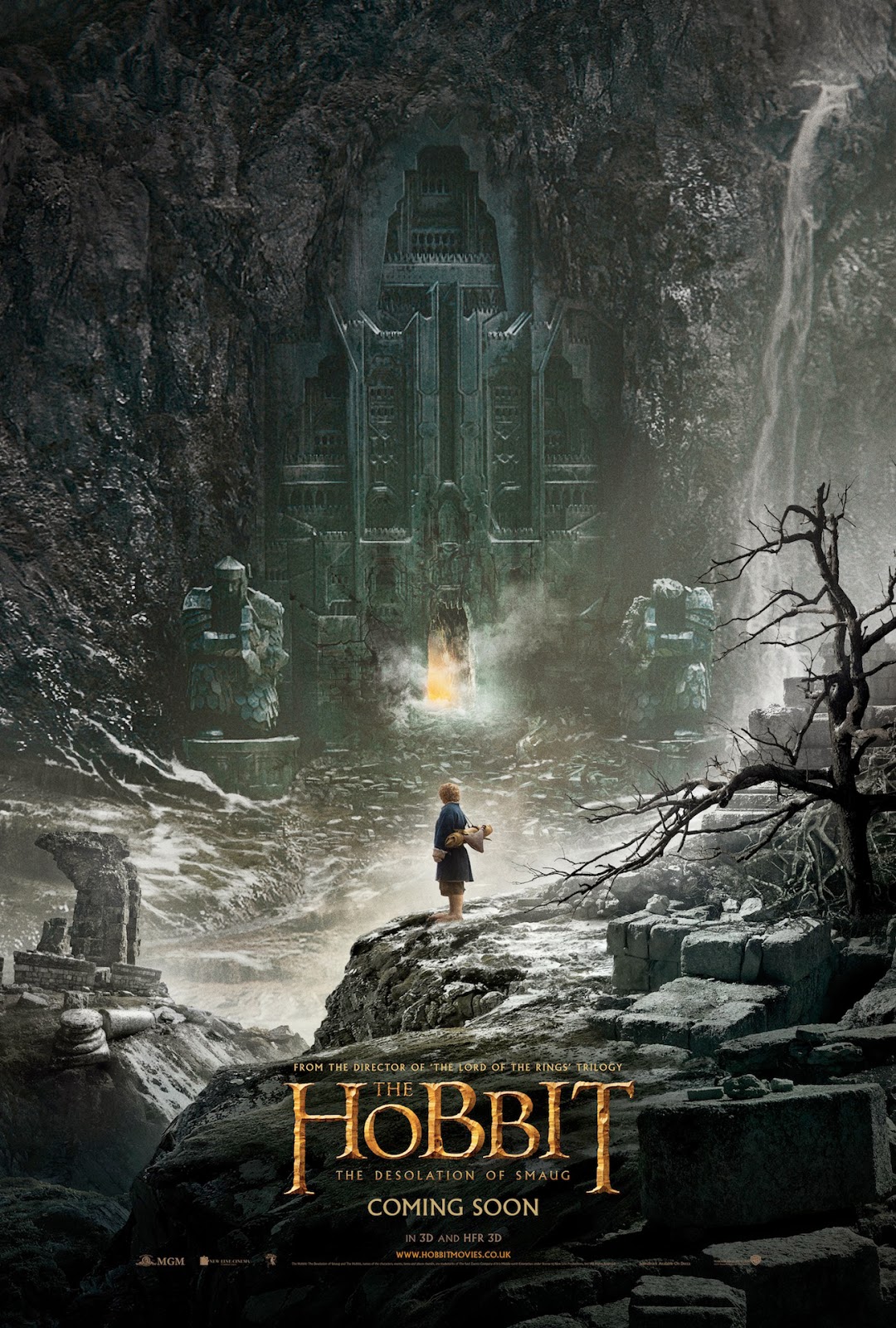
The Hobbit: The Desolation Of Smaug (12A)

We have one rule here at Popcorn Towers - write the review as soon as you get out out of the cinema. That's it.

The aim is to capture the feelings a film gives you as instantly as possible, the excitement, the disappointment, the joy - whetever.

Which is where Hobbit 2 has caused me a problem.


I awoke yesterday morning feeling like I'd gone at it big-style at a Baggins bash. If a part of me didn't hurt, it was because I couldn't feel it. But I soldiered on.

It was Hobbit day, and if nothing else I had to try and wipe last year's disappointment from my memory. After the joy of the Lord Of The Rings trilogy, I owed co-writer/director Peter Jackson another chance.

But by the gods it was tough. And I decided to take a bit of time to look back, as it was hard to work if my health was clouding my views.

Also, the minute I got home I fell asleep. And didn't wake up 'til it was time to go to bed.

So, here we are, the cold light of the afternoon after. And I still have no idea what Peter Jackson thinks he's doing.

Let's not dwell on the whole 'turning a short book into a trilogy' thing - it's a dumb idea, but it's done now.

Let us, instead, start with a recent interview in which Jackson said the great thing about getting the first film out of the way was that you didn't have to dwell on who was who - that was all sorted - you could just hit the gas and get on with the story.

Which raises the first of many questions - mainly the fact that if that were the case, why did we need an opening ten minutes of recap? If everything was so well set up in An Unexpected Trilogy, why did we need telling AGAIN?

Other questions still linger from the first film, including how a tribe of dwarves from the same mountain have such a wide variety of regional accents - something he has added to this time round by having a family with, seemingly, Welsh accents whose eldest daughter is from East London.

Maybe she's adopted.

Questions also need asking about the two hour fourty minute running time. The Hobbit is a short book, and somehow Jackson is going to stretch the whole shebang to close to ten hours. That's a lot of padding.

Tolkien purists will point out Jackson's done this by padding with characters he's made up himself, but he's also done this by going down the 3D route and adding a lot of scenes purely for the benefit of having things come flying out of the screen.

He really should have stuck to telling the story.

Ahh, yes, the story. This being the middle bit of the trilogy, we're covering the bit through the woods to the mountain to meet the dragon. This takes almost three hours. Kubrick did the birth of the universe and the whole of evolution in 90 minutes.

But let's leave quibbles of the running time aside. What's done is done, and he's doing it all again next year, so moaning won't change anything.

Let's find some positives.

Martin Freeman is again wonderful as Bilbo. Having grown into the role, he owns every scene he's in and more than holds his own going up against Sir Ian McKellen's Gandalf.

Sylvester McCoy is actually better this time round as Radagast, while Evangeline Lilly is stunning as Tauriel.

And the action set-pieces are well done. People go down a river in barrels, Bilbo surfs a sea of gold coins, orcs die in many a splendid way - these are all things Jackson does well.

Then there's Smaug.

We already know Benedict Cumberbatch is a good actor, but he's also a damn fine dragon it turns out. Oozing sinister intent, mixed with a smidge of sexual charm, you'd go on a date with this dragon. You know it won't end well, but hey...

But none of this is enough to stop Hobbit 2 from being anything more than OK.

Yes, it's better than the first one, but it lacks focus. Too many times you'll leave one scene mid-action to check in with another character's bit of the story before cutting back to the main bit of the plot. Which makes the thing feel a bit disjointed.

It also makes you wonder how long it takes Bofur to actually find the herbs, given what else has happens after he leaves the house...

Ahh, Bofur. And the many other dwarfish folk. Jackson still hasn't got a grip on them you know.

What was clear in the first Tolkien trilogy was Jackson knew the characters. Knew them, loved them, and made each one shine.

This is not the case here.

OK, this time we're saved the singing and the washing up, but Thorin Oakenshield aside (a fine performance again by Richard Armitage) and possibly Balin (yes, it's Ken Stott under there), the other dwarves have all the depth of a fine mist.

And Jackson seems so hell bent on getting each of them on the screen, he's sacrificed the story and the action.

There's also absolutely no need to throw an elf-dwarf love story into the mix.


Like I said, this isn't Hobbit 1 - it has more zip, more flair, more swish. But it's still not brilliant.

When you look back at the Lord Of The Rings films, you can see what Jackson can do as a director. Those films were epic. And you didn't care that they were too long, because you were having so much fun watching them.

And it's remembering this that makes you realise that, again, Jackson has fallen short of expectations. Which doesn't make one look forward to There And Back Again.

Thursday, 12 December 2013

Top 10 of 2013

Yes, you've guessed it, it's that time of year when film fans - not content with having enjoyed a year's worth of movies - feel the need to then draw up a list of their favourites.

How else will we know, in years to come, which was our favourite? And how else can other people take issue with our choices and point out all the ones we got wrong?

It's what loving films is all about.

This year, in a change to the format, we'll be starting at 10 - because it's Christmas, and who doesn't like being kept waiting for the big reveal? No scrolling to the end now...

Oh, and just to maintain the suspense a tad longer, lets take a moment to remember the turkeys. It is Christmas after all.

January set the bar high with Movie43, a diabolical waste of everyone's time and money that failed to raise so much as a titter as a plethora of stars looked embarrassed and bewildered by the unfunny sketch they had to perform. Presumably at gunpoint.

Hansel And Gretel - Witch Hunters fell just the wrong side of stupid, taking a half-decent idea and then stomping on it with an anvil, while The Host proved that Stephanie Meyer should have stuck to vampire love triangles.

Spring Breakers and The Bling Ring also took good ideas and ruined them, with Dark Skies happy to prove that having all the ingredients of a thriller is not enough - you need to actually do something intelligent with them.

Of the 'blockbusters', May and June struck out, serving up both The Great Gatsby (which wasn't) and Man Of Steel (the dullest superhero film made to date). Not that July did any better, as Now You See Me made people wish they hadn't. And the less said about World War Zzzzzz the better.

After that things seemed to pick up - right up to the point The Fifth Estate came along. Benedict Cumberbatch was as good as ever, but even he couldn't save this mess. Still, at least he wasn't in The Counsellor.

Movie43 was still the worst, though. And that in a year Machette Kills was unleashed.

Anyhoo, that's enough negative wossinames, let's get to the chart. Feel free to put on Yellow Pearl or that jazzed-up Whole Lotta Love while you read this (assuming you're old enough to actually remember Top Of The Pops).

Nestling just outside the Top 10 we have Midnight Son, Stoker and Robot And Frank - any one of which would have been in the 10 in a lesser year.

Anyway, right, yes, the actual 10. Play the music...


Katharine Isabelle plays a medical student who finds an alternative way of paying her student fees, utilising skills that come in damn handy when revenge is called for. Luxuriously shot, superbly performed and garishly brutal, it's the shot in the arm an increasingly tired horror genre has needed.


A recurring theme this year - the task of making a despicable character likeable. Something James McAvoy pulls off here with aplomb. In a year that saw him shine in both Trance and Welcome To The Punch, this is the film that stood him out from the crowd as he played a corrupt police officer drinking and snorting his way through a breakdown. And making you laugh as he did it.


The first of two films with young stars at the centre of the action, Lore (pronounced Laura) tells the tale of a young girl (Saskia Rosendahl) who has to take over as the head of the family after the Third Reich falls, taking her high-ranking Nazi parents with it. Touching and sensitive while never shying away from the brutal truth of the new situation, it was a spellbinding piece of filmmaking.


At a time when big corporations are coming under greater scrutiny and suspicion, Britt Marling's look at a gang who target companies who have wronged innocent people could not have been better timed. Tense, gripping and with a stellar supporting cast, The East took you inside the action, forcing you to question who was right and who was wrong.


One that really did divide the critics (the American Film Institute had this in its 10 worst films of the year), OGF was not an easy watch by any stretch. Rich in colour, the story of a screwed up family and bonkers cop all out for revenge was so slow-paced you could feel dust settling on you as you watched. But watch we did, gripped and enthralled by the dark, twisted tail - and entranced by Kristen Scott Thomas' stunning portrayal of the mother from hell. And yes, Ryan Gosling was Ryan Gosling, but in films like this he fits in just fine.


Yattter, yatter, blah, blah, Woody Allen returns to form etc etc - but wait, here he actually has. Breaking his own box office records, Cate Blanchette's portrayal of an unlikeable woman who is the architect of her own downfall was heartwarming and captivating. Oh, and Sally Hawkins is amazing in it as well.


A small British film that deserved a much wider audience, Broken saw the debut of Eloise Laurence, who performance as Skunk was simply astounding. Hard to explain but easy to enjoy, Broken is the tale of converging lives on one inner-city housing estate. It's violent, it's funny, it has an ending not everyone agrees with (we loved it), and it has more quirk than most films have a right to. It's simply beautiful.


Only Joss Whedon could decide to take a bunch of mates, mess about at home for 12 days with a Shakespeare classic, shoot it in black and white, and make it this good. A front runner for film of the year after its premiere at the Bradford International Film Festival, it's only been edged out by late contenders. If I could have a triple-header at 1 I would, but I'm a stickler for my own rules. Much Ado is one of the finest Shakespeare adaptions you'll ever see.


It's got a cast of barely two, it's been shot in 3D and the whole thing takes place in space. There is no way this can be any.... Oh. It can. And is. On paper this film shouldn't have worked, but thanks to a stunning performance from Sandra Bullock and some ground-breaking effects, Gravity just pins you to your seat for 90 minutes. I was still catching my breath half an hour after it had ended.


So what does it take to push the other members of the top 4 down a place? Well, a Belgian film full of bluegrass music that looks at love, loss, grief and religion. Obviously. OK, that doesn't sound like a winner, but it's the way you fall in love with the characters from the off, the way even the darkest moments lift your soul, the way a genre of music you probably wouldn't touch with an extra-long banjo all come together to just wrap you in love and warmth that makes this stand out from the crowd. There isn't a bad performance, there isn't a mis-step, there's just a sublime cinematic experience that we are still telling total strangers about now.


Right, just The Hobbit 2 and Walter Mitty to go, and then we can crack on with 2014...

Wednesday, 11 December 2013

Saving Mr Banks (PG)

Now I know this film has been out for a couple of weeks, but life has this uncanny habit of inserting its screwdriver into the least suitable part of the works at just the wrong time.

So it's been a bit of a battle to get out from Popcorn Towers and actually spend a couple of hours in the company of Tom Hanks, Emma Thompson and - kinda - Mary Poppins.

Fortunately, nothing major has crossed our path (except maybe Nebraska, that looks damn good) since Banks was released, so nothing else has got in the way. One advantage of a massive blockbuster being on the horizon (evening Bilbo).


If you've missed the hype around Saving Mr Banks, you've done well - but allow us to fill you in.

Hanks plays Walt Disney, Em plays Mrs Travers (she wot wrote Mary Poppins), Paul Giamatti plays her driver Ralph, Bradley Whitford, Jason Schwartzman and B.J. Novak play the poor buggers trying to write the film and Ruth Wilson and Colin Farrell play Mrs T's parents.

The film focuses on the battle (and it was a fight and a half) to get the world's favourite umbrella-bearing nanny to the silver screen, interspersed with flashbacks to Mrs Travers' early life growing up down under with her two sisters and dad's drink problem.

With me so far?

Now, a lot has already been written and said elsewhere about Farrell's English accent in this film - but it's better than the Irish one he tried in Daredevil (and yes I do know he's Irish), and in a world where Dick Van Dyke's laughable attempt is looming on the horizon, Farrell does just fine.

A lot has also been mentioned of Oscars. Yes, I know, you're still doing your Christmas shopping, but the great and the good of Hollywood are well into next year and planning their wardrobes.

On the face of it, Saving Mr Banks wouldn't appear to be Oscar fayre - it's good, don't get me wrong, in fact it's very good, but it doesn't have that 'worthy' feel of a 12 Years A Slave or The Butler.

But it's the performances that elevate this above a standard, Disneyfied biopic.

As ol' Walt, Hanks is sublime. He's not over the top, he's not trying to act everyone else off the screen. Instead it's a subtle, measured performance. He perfectly captures a man trying to hold himself to a promise made to his children.

Hanks plays him as a thoughtful, caring man. A man people liked working for, a man who - while keen to make money - was driven by wanting to make magical movies for children of all ages.

It is a measure of the strength of Hanks' performance that his is not overshadowed by Emma Thompson. And this is every bit HER film.

Travers was a woman haunted by her past, a difficult childhood without which there would have been no Mary Poppins. As a result, she is fiercely protective of both Poppins and the Banks family.

And Thompson captures this perfectly.

Travers' fears of going to Hollywood, her efforts to kybosh the film and her years of keeping the world at arm's length did not make her a warm, loveable human being - but Thompson gets in behind the facade, producing a touching, almost fragile portrayal of a woman lost in the world.

The film teaches us (or certainly me) that the film was Travers' last chance to make some money. The books sales had dried up and she'd had to get rid of her maid. Amazingly, this didn't make her any more likeable.

Despite all of her defences, through Thompson you warm to Travers. You share her fears and feelings, her mannerisms and expressions make you laugh and smile. The only time you're not on her side is when she's being nasty to the script and song writers.

There's really precious little to be negative about with Saving Mr Banks - yes it's a bit saccharine, but it's a Disney film. It's actually quite toned down for the House Of Mouse.

The look of the film is also excellent - it has the perfect, aged look of a film shot in the early 60s. That slightly worn look celluloid takes on after being stored for many years.

Oh, and Giamatti almost steals the whole thing. If he isn't on the Oscar shortlist, I'll be very cross...

If I had any criticism, it would be the flashback scenes. Yes, we need to see what shaped Travers, yes we need to discover the inspiration and what led to her hatred of pears, but these could have been cut down. And more should have been made of the incident with her mother.

But (and it's a huge but) all is forgiven and forgotten during the  final scene when Walt rocks up in London to try to finally get the film made.

The emotional weight of that encounter, added to the emotion of the premiere, leaves you feeling warm of heart and moist of eye.

Away from all the Oscar buzz and hype, Saving Mr Banks isn't a film that will change your life - but it will make you feel warmer towards the world.


With two stellar performances from stars at the top of their game, and a rendition of Let's Go Fly A Kite that will have you grinning from ear to ear, this is a film the whole family will enjoy.

And it'll make you want to watch Mary Poppins when you get home.

Which is what I'm now going to do...